Brain ultrasonography (neonatology)

Ultrasonographic examination of the brain is an important part of neonatal care, especially prematurely born and other at-risk newborns. It is performed without sedation, through the fontanels. It is primarily used to detect intracranial bleeding, hydrocephalus and periventricular leukomalacia.[1]
-
 An Ultrasound machine.
 -
 Large (frontal) and small (occipital) fontanelle.
 -
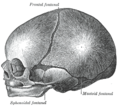 Sphenoid and mastoid fontanelle.
 -
 Plains.
 -


-
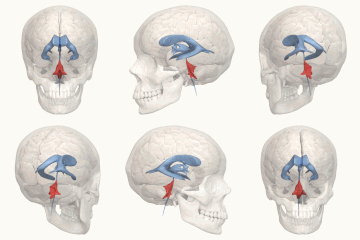
 Chamber system 3D.
 -

-
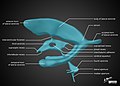 Chamber system.
 -
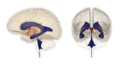
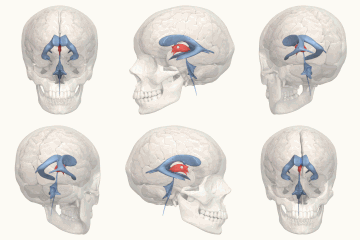
 Chamber system.
 -
-
-
-
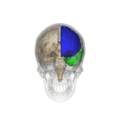
 Lobes of the hindbrain.
 -
 Lobes of the hindbrain.
 -
-

-

-

-
-

-

-
-
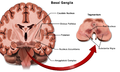 Basal ganglia.
 -

-
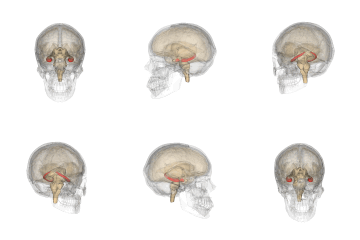
-
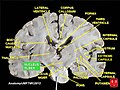
-

-

-

-

-
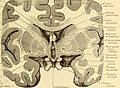
-

-
-
 Cerebellum
 -

-

-

-


_(14586519707).jpg)
_(14792871073).jpg)


Resources
Related articles
External links
Reference
- ↑ – GUPTA, Pankaj – SAXENA, AkshayKumar. Neonatal cranial sonography: A concise review for clinicians. Journal of Pediatric Neurosciences. 2016, y. 1, vol. 11, p. 7, ISSN 1817-1745. DOI: 10.4103/1817-1745.181261.

