Ionization and excitation

Ionization and Excitation
Ionization and excitation are the two fundamental processes by which radiation transfers energy to matter. They occur when electromagnetic radiation or charged particles interact with atoms and molecules.
Excitation
Excitation is the process in which an electron absorbs energy and moves from a lower energy level to a higher energy level without leaving the atom.
A+E→A∗
where:
- A = atom in ground state
- A∗ = excited atom
The atom remains electrically neutral. The excited state is unstable, and the electron returns to its original energy level by releasing energy in the form of electromagnetic radiation or heat.
Ionization
Ionization is the process in which sufficient energy is transferred to completely remove an electron from an atom or molecule.
A+E→A++e−
The result is the formation of:
- a positive ion (A+)
- a free electron (e−)
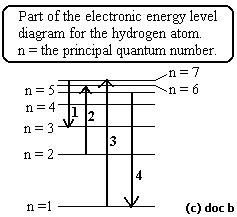

If the free electron possesses enough kinetic energy, it can produce further ionizations, called secondary ionization.
The ionisation energy is the minimum energy needed to remove the electron from the atom completely
⇒ This shows a number of possible excited states for a hydrogen atom.
In biological tissues, radiation interacts mainly with water molecules, which constitute most of the cell mass.
Ionization and excitation lead to:
- formation of free radicals
- chemical reactions
- damage to proteins, membranes, and nucleic acids
These processes are the basis of the biological effects of ionizing radiation.

